
Metal Building Supply Planning Guide: How to Avoid Costly Mistakes on Large Jobs
You’ve got that contract. Crews are lined up, and paperwork is all sorted out. You’re ready to earn some money! But then the steel panels show up at the site, you’re looking at the wrong profiles, short counts, the project is behind schedule, and you’re forced to burn the candle at both ends to get things stabilized.
It’s a nightmare scenario familiar to anyone in procurement, whether it’s in information technology, manufacturing, or construction. Large-scale metal building projects like warehouses, ag buildings, and commercial facilities—live and die by supply planning. These materials take time to produce in large quantities, and they aren’t easy to move around. Mistakes get expensive—very quickly.
That’s why Fairlie Metal House takes metal fabrication seriously. From materials engineering to supply chain resilience, we understand what it feels like to be under pressure to deliver. 40 years of experience in metal construction and fabrication inform how we work, and, as a metal panel supplier, we know how important it is to get requirements precisely right every step of the way.
Let’s get started!


TL;DR - Metal Building Supply Planning Guide
- Comprehensive Material List: Know your full material list, including panels, trim, fasteners, and closures, as large projects introduce complexity that demands deliberate planning.
- Finalized Estimation: Lock in material quantities only after you have finalized and approved the construction documents to avoid ordering materials based on preliminary plans that may change.
- Waste Buffer: Factor in necessary buffers for cutting waste (3% to 7%) and potential damage (1-2%) to prevent costly emergency re-orders and schedule delays on large buildings.
- Avoid Mismatches: Prevent common mistakes by confirming the exact color code (not just the color name), building in lead times for custom items, and confirming gauge and profile compatibility.
- Logistics & Partnering: Stage deliveries to match the build sequence, protect materials on-site (elevate and ventilate), and choose a supply partner with in-house fabrication and experience with large-scale jobs.
Understanding Metal Building Supply Requirements for Large Projects
Here’s the thing about large-scale building projects. Large projects introduce a complexity that smaller jobs just don’t have.

A backyard shop and a 20,000 square foot warehouse aren’t the same. More square footage means more material, more coordination, and more chances for something to go wrong.
Scale adds complexity. Complexity demands planning.
To start, make sure you know your full material list before you order. Break it down into every single component. For most large-scale metal building projects, you’re likely looking at:
- Wall and roof panels: You want to get things right for type, gauge, profile, and color. These aren’t interchangeable. For example, a 26-gauge PBR panel and a 24-gauge standing seam panel are very different items, and getting them mixed up will result in a huge headache.
- Trim and flashing: You’ve got your ridge caps, corner trip, J-channel, base flashing, drip edge, rake trim, eave trim, transition, the list goes on.
- Fasteners and accessories: Screws, rivets, pipe boots, foam closures, butyl tape, sealant—did we mention that you’ll likely need different sizes? These are small items, but running out of them is just as bad as running out of panels.
- Closures and ventilation components: these include ridge or gable vents, as well as any other specialty items the design calls for.
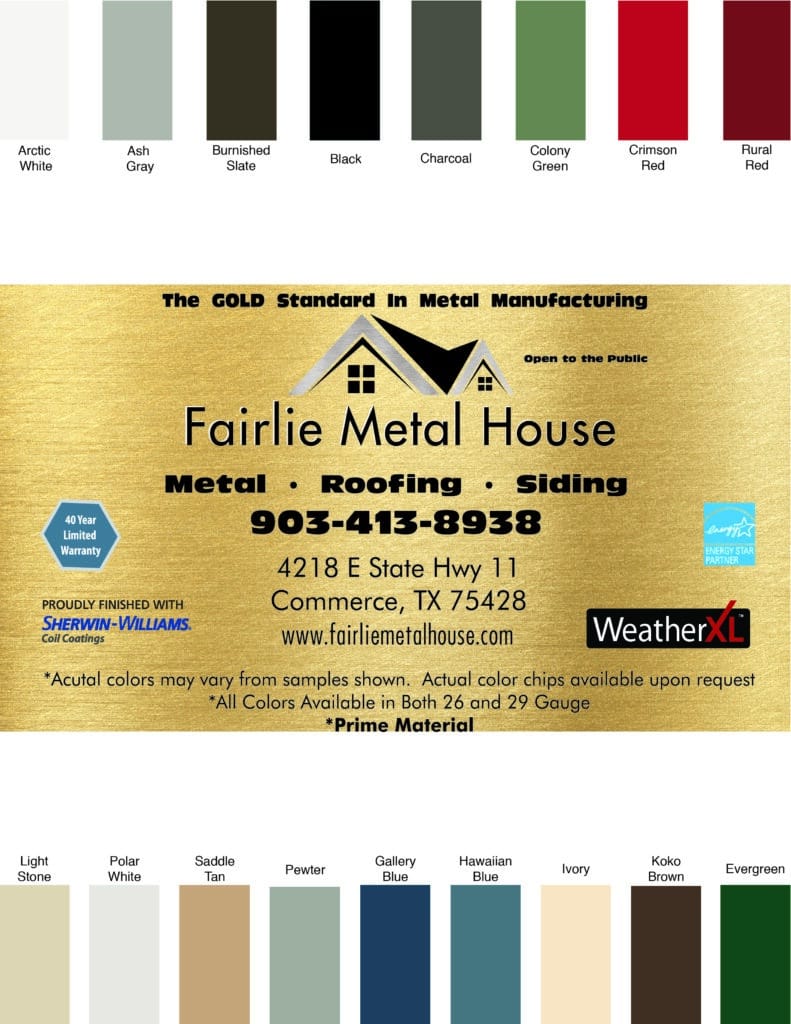
Don’t overlook custom trim! It doesn’t mean it’s a fancy color like Goose Turd Green or Sulking Room Pink (Fairlie’s color names are much more conventional, but we promise they’re still attractive). While standard trim works for standard buildings, large-scale jobs often need special profiles to handle unique transitions, parapet caps, or non-standard eave details.
Sounds like a lot? It’s like packing for a trip. You can wing it if you’re just going away for a weekend—maybe a quick trip to get that toothbrush you left at home. But a two-week job across multiple sites will need more deliberate planning. A competent materials purchasing manager and a project manager will deal with those headaches for you and put your client at ease, too.
Accurately Estimating Materials and Quantities
Poor cost estimates are the #1 cause of delays and budget overruns in building projects. It’s expensive, disruptive, and often preventable.

According to a study by The Project Management Institute, nearly 30% of construction projects globally experience cost overruns, while 25% of projects face schedule delays. Here’s how you prevent these costly mistakes.
Start With Finalized Drawings
It may sound blatantly obvious, but you’d be surprised how often orders get placed off preliminary plans or sketches that are considered “close enough,” or changes are made without any communication: the architect revises the roof. The owner adds a lean-to. A door is moved a few feet to the left. All of a sudden, the panels you ordered last week won’t work anymore, and you’re stuck with material that doesn’t fit.
So to avoid getting stuck with wasted material, don’t lock in quantities until you have the approved construction documents in hand, because preliminary plans change, while approved plans mostly don’t.
Factor in Waste and Overlap
Metal panels don’t go up edge-to-edge, but overlap. Add to the fact that every cut produces scrap, and these small pieces add up to big numbers on a large building. You’ll need to account for:
- Panel overlap: A standing seam panel overlaps differently from a PBR or R-panel, so know your profile’s coverage width vs its overall width, and estimate the coverage number.
- Cutting waste: Budget between 3% and 7%, depending on the building’s complexity.
- Damage buffer: panels can get damaged—from getting scratched in transit, dented during offloading, or damaged by wind during installation. A small buffer of 1-2% keeps you from scrambling over a few damaged panels.

While ordering extra material sounds wasteful, skipping the waste calculation on a small job could cost you a trip to the supplier, but skipping it on a 40,000 sq ft building could set you back a week or more.
Don’t Treat Trim as an Afterthought
In small projects, a contractor could spend hours dialing in a panel estimate, count every sheet, and calculate every overlap—then estimate trim by eyeballing it.
This works fine on a small garage, but on a large commercial building, trim quantities add up fast. You have ridge caps, eave trims, rake trims, corner trims, J-channels, base flashing, drip edges, door and window casings, transitions between wall types—not to mention extra details like color. And every piece you’re short on during install day is a piece your crew is standing around waiting for.
Treat your trim takeoff with the same care as your panel takeoff. Measure, count, then add a small buffer for field cuts and adjustments.
Talk to Your Supplier Before You Order
A good metal building supply partner isn't just there to take your order. They're there to check it.

At Fairlie Metal House, we've reviewed hundreds of material lists for large-scale projects, and we regularly catch gaps that would've caused problems on the jobsite — a missing transition trim, an undercount on rake pieces, a gauge mismatch between wall and roof panels. It’s something we’ve learned from over 40 years of experience in metal fabrication.
A 15-minute phone call before you finalize your order is a lot cheaper than a mid-project emergency re-order—every time.
Common Planning Mistakes That Cost You Time and Money
Most supply problems on large jobs are preventable. They come from rushing, assuming, or skipping steps that seem small—until they’re not. Here are some common mistakes that can upend your costs and schedule:
- Ordering by color name alone. “White” isn’t just “white.” Different manufacturers use different color systems. A “Polar White” from one supplier and a “Bright White” from another might look fine on a sample chip—but once you see the two colors side by side on a 200-foot wall, you can’t unsee it. Confirm the exact color code and finish.
- Ignoring lead times on custom items. Standard panels might ship in days. Custom trim, specialty gauges, or non-stock colors can take longer. Build those lead times into your project schedule, not around them.
- Not confirming gauge and profile compatibility. Mixing profiles or gauges mid-project creates fit issues, aesthetic inconsistencies, and potential warranty problems. It’s like putting mismatched tires on a truck—it’ll roll, but it won’t ride right.
Coordinating Delivery, Storage, and Logistics
Getting the right materials is only half the job. Getting them to the site, on time, in usable condition is the other half.
Stage Deliveries to Match the Build Schedule
On large projects, you probably don’t want—or have room for—all materials at once. A jobsite buried in panels before the framing is done isn’t efficient. It’s a liability.
Work with your supplier and project manager to schedule phased deliveries. Roof panels first, wall panels next, trim last. Materials arrive when the crew needs them—not three weeks early, sitting in the mud.

Protect Materials On-Site
Remember that metal panels are durable once installed, but they’re vulnerable during storage.
- Elevate off the ground. Use dunnage or pallets. Panels in standing water will corrode, even with protective coatings.
- Cover and ventilate. Trapped moisture causes white rust on galvanized surfaces. A tarp works, but leave the ends open for airflow.
- Keep them away from high-traffic areas. Forklifts and foot traffic can dent or scratch panels before they ever get installed.
Plan for Access and Changes
Large deliveries need room, so make sure the site can accommodate trucks and that offloading equipment—forklifts, cranes, boom trucks—is scheduled. A flatbed loaded with 40-foot panels sitting at the gate because nobody arranged a forklift isn’t a great start to the day and makes you look bad.
What if the build schedule shifts? It’ll be a hassle to make those calls, but you’ll have to make sure your supplier knows what happened. Adjusting a delivery date is as simple as a phone call, but having to store panels on a muddy jobsite for three extra weeks is damage you don’t need.
Choosing the Right Metal Building Supply Partner
Your supply partner matters as much as the materials themselves. The wrong supplier adds risk. The right one removes it.
- Fabrication capability. Does the supplier manufacture its own panels and trim, or is it a middleman? In-house fabrication means faster turnaround and the ability to produce custom profiles.
- Experience with large-scale jobs. A supplier who mainly handles residential re-roofs may not be equipped for a 50,000 sq ft commercial project.
- Lead time transparency. Can they tell you what’s in stock and give you honest timelines? Vague answers aren’t good enough on a large job.
- Technical support. Will they help with takeoffs, color matching, and profile selection—or just take your order? A supplier who knows their product inside out is worth their weight in gold.
- Geographic proximity. Shipping heavy materials long distances adds cost and lead time. A regional supplier keeps logistics simple.

The bottom line is that a great supply partner doesn’t just fill orders. They help you avoid problems you didn’t see coming.
Making the Call
The best large-scale metal building projects aren’t the ones with the biggest budgets. They’re the ones with the best planning and scheduling. That’s why, before you order a single panel, ask yourself:
- Do I have a complete material list—panels, trim, fasteners, closures, ventilation?
- Am I estimating off finalized, approved drawings?
- Have I accounted for waste, overlap, and a damage buffer?
- Is my delivery schedule aligned with the build sequence?
- Do I have a plan for on-site storage and material protection?
- Am I working with a supply partner who fabricates in-house and knows large-scale work?
If you can check those boxes, you’re on the path to success.
At Fairlie Metal House, we manufacture metal building panels, roofing, siding, and custom trim profiles, and we’ve been doing it for over 40 years. Located in Fairlie, just outside Commerce, TX, our team is ready to help you plan, estimate, and supply your next large-scale project.

Whether you’re building a commercial warehouse, an agricultural facility, or an industrial shop, we’ll help you get the right materials, in the right quantities, on time.
Contact us today, and let’s keep your next big project on track!